


Haines City flood insurance has become one of the most important coverage conversations in Polk County as the city’s explosive growth continues reshaping local drainage patterns, retention systems, and stormwater infrastructure. With a population that has surged to approximately 45,973 residents as of July 2025 — representing roughly 75% growth since the 2020 Census — Haines City is adding homes, roads, and paved surfaces faster than many drainage systems can adapt.
- Local Reality: Haines City’s rapid growth near Lake Marion, Lake Hatchineha, and expanding master-planned communities like Hammock Reserve is placing increasing pressure on local drainage and stormwater systems.
- The Coverage Gap: Standard homeowners insurance does not cover flood damage caused by rising water entering from outside the structure — regardless of what caused the flooding.
- Coverage Options: Both NFIP and private flood insurance options are available for Haines City homeowners, with private policies often providing higher limits and broader coverage.
- The Independent Advantage: Think Safe Insurance compares multiple flood insurance options side-by-side for Haines City homeowners based on the specific characteristics of your property and location.
From established neighborhoods near Haines City Historic Downtown and US-27 to newer master-planned communities throughout Hammock Reserve and areas surrounding Southern Dunes Golf and Country Club, flood exposure in Haines City depends heavily on elevation, drainage design, proximity to lakes, and how water moves through rapidly developing terrain.
Does Haines City Really Have a Flood Risk?
Yes — and the risk is growing alongside the city itself. Haines City’s location in central Polk County, combined with its proximity to multiple lake systems and its position as one of Florida’s fastest-growing cities, creates real inland flood exposure that many homeowners overlook.
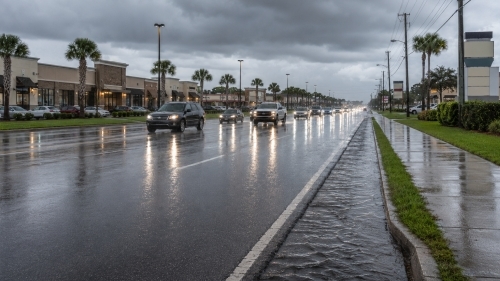
The US-27 corridor running through Haines City carries not just commuter and tourist traffic but also enormous stormwater runoff from expanding commercial development. Every new shopping center, warehouse, parking lot, and subdivision along US-27, Hammock Ridge Road, Combs Road, and SR-544 converts green space into impervious surface — accelerating how quickly rainwater moves toward drainage systems, retention ponds, and nearby lakes.
Homeowners moving to Haines City from nearby Davenport, Winter Haven, Auburndale, Kissimmee, Bartow, and Lakeland often assume newer construction means lower flood risk. In reality, new development can increase drainage stress throughout a watershed — sometimes affecting older established neighborhoods more than the new ones.
Nationally, approximately 25% of flood claims occur in moderate or low-risk flood zones. That figure matters in Haines City because many properties sit outside mapped high-risk areas while still facing meaningful drainage and lake-related flood exposure.
Lake Marion, Lake Hatchineha, and How Water Moves in Haines City
Two lake systems define much of Haines City’s flood exposure profile: Lake Marion and Lake Hatchineha.
Lake Marion sits near the heart of older Haines City neighborhoods and has historically influenced water table levels and drainage behavior throughout surrounding residential areas. During prolonged tropical rainfall, lake levels can rise quickly — affecting properties near shorelines, low-lying roads, and older drainage infrastructure that was not designed for today’s development density.
Lake Hatchineha, part of the broader Kissimmee Chain of Lakes system, also plays a role in regional water behavior. As water moves through the watershed during significant storm events, properties near drainage corridors connecting to this system can experience flooding well outside what FEMA flood maps capture.
Retention ponds throughout newer communities like Hammock Reserve help manage stormwater during normal rain events, but consecutive days of tropical rainfall can overwhelm even well-engineered systems. When retention ponds approach capacity, overflow can move toward adjacent streets, driveways, and structures — including homes that have never experienced water issues before.
Haines City also sits within Polk County’s karst geology region, where underlying limestone formations can affect how water drains and moves through the soil. This creates localized drainage behavior that standard flood maps may not fully reflect.
FEMA Flood Zones in Haines City — What Zone X Actually Means
Flood zones provide a baseline estimate of long-term flood probability, but they do not guarantee where water will or will not accumulate during an extreme storm event.
Zone X properties sit outside the official 100-year floodplain. Flood insurance is typically not required by lenders for Zone X properties, but meaningful flood exposure can still exist — especially near Lake Marion, Lake Hatchineha, retention pond systems, and rapidly developing drainage corridors throughout Haines City.
Properties in Zone AE or Zone A fall within Special Flood Hazard Areas (SFHA). If these properties carry federally backed mortgages, flood insurance is generally required by the lender.
Because flood zone designations are determined at the parcel level, every Haines City homeowner should verify their specific flood zone status by address rather than assuming based on neighborhood or subdivision. Two homes on the same street can carry different flood zone designations depending on elevation and drainage proximity.
How Rapid Growth Is Changing Haines City’s Drainage Profile
Haines City’s 75% population growth since 2020 is not just a demographic statistic — it is a direct driver of changing flood risk throughout the city.
Every new subdivision, commercial development, road expansion, and parking lot along US-27, US-17, Hammock Ridge Road, and Combs Road adds impervious surface that prevents natural water absorption. That runoff has to move somewhere during heavy rainfall — typically through retention ponds, drainage swales, roadside ditches, and ultimately toward low-lying areas and lake systems.
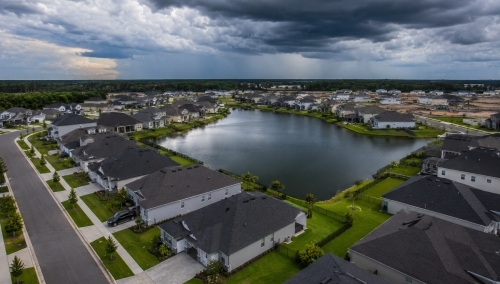
Newer master-planned communities like Hammock Reserve are engineered with modern stormwater management in mind, but the cumulative effect of rapid development throughout the broader watershed can create flood pressure in unexpected locations — including older established neighborhoods that never experienced flooding before new construction began nearby.
This dynamic makes flood insurance worth evaluating for Haines City homeowners even when their property sits in a Zone X designation, sits away from obvious water features, or was built recently with modern drainage design.
NFIP vs. Private Flood Insurance for Haines City Homeowners
Flood insurance is available through two primary channels: the National Flood Insurance Program (NFIP) and private flood insurance carriers.
The NFIP is federally backed and uses standardized coverage structures nationwide. Current NFIP limits include:
- $250,000 maximum building coverage
- $100,000 maximum contents coverage
NFIP policies also carry a standard 30-day waiting period before coverage takes effect unless a loan-closing exception applies. This waiting period makes securing coverage well before storm season critical — not after a storm is already forming.
Private flood insurance has expanded significantly throughout Florida and may offer:
- Higher building and contents limits
- Replacement cost coverage for personal belongings
- Additional living expense coverage
- Shorter waiting periods
- Broader underwriting flexibility for newer construction
Newer homes in Hammock Reserve and communities near Southern Dunes Golf and Country Club may qualify for competitive private flood options depending on elevation, construction details, and drainage proximity. Comparing NFIP and private flood options side-by-side is often the most effective way to find the right fit for a specific Haines City property.
How Polk County’s CRS Rating Affects Your Flood Premium
Polk County participates in the FEMA Community Rating System (CRS), which rewards communities that implement floodplain management practices beyond minimum federal requirements.
Polk County’s unincorporated areas hold a CRS Class 6 rating, which can provide approximately a 20% reduction on eligible NFIP flood insurance premiums for qualifying properties in those areas. However, the City of Haines City is an independent municipality with its own NFIP community status.
This distinction matters because the difference between the county and city CRS status can affect pricing meaningfully on an NFIP policy. Flood insurance quotes should always be run on the specific address, and the CRS ratings will be applied appropriately.
Step-by-Step: How to Review Flood Insurance in Haines City
- Verify your FEMA flood zone status by address — not by neighborhood or subdivision name — using FEMA’s flood map service or Polk County flood resources.
- Evaluate proximity to Lake Marion, Lake Hatchineha, retention ponds, and drainage corridors surrounding your specific property.
- Review whether your current homeowners policy includes any flood coverage — most standard policies do not.
- Compare NFIP and private flood insurance options side-by-side including waiting periods, deductibles, coverage limits, and pricing.
- Ask whether your property qualifies for CRS-related discounts based on its specific jurisdiction — city versus unincorporated Polk County.
- Review contents coverage carefully — replacing flooring, furniture, appliances, and electronics after a flood loss is more expensive than most homeowners expect.
- Secure coverage well before hurricane season begins in June — NFIP’s 30-day waiting period means waiting until a storm is forecast is too late.
- Work with an independent insurance agency that can compare multiple flood options based on your specific Haines City property and risk profile.
Frequently Asked Questions
Do Zone X homes in Haines City really need flood insurance?
Many do. Zone X means a property sits outside the mapped 100-year floodplain, but it does not mean flooding cannot occur. Homes near Lake Marion, Lake Hatchineha, retention ponds, or rapidly developing drainage corridors can still face meaningful flood exposure during severe rainfall events.
Does homeowners insurance cover flooding in Haines City?
No. Standard homeowners insurance policies do not cover flood damage caused by rising water entering from outside the structure. A separate flood insurance policy is required regardless of what caused the water accumulation.
Is NFIP or private flood insurance better for Haines City homeowners?
It depends on the property. NFIP coverage may work well for some homes while private flood insurance may provide higher limits, broader coverage, or shorter waiting periods for others. Comparing both options side-by-side based on your specific property helps identify the strongest fit.
Can new construction neighborhoods in Haines City still have flood risk?
Yes. Newer communities include modern drainage design, but rapid development throughout the broader Haines City watershed adds impervious surface that can stress drainage systems during prolonged tropical rainfall. Flood risk depends on elevation, retention pond proximity, and surrounding development — not just the age of the home.
Get a Haines City Flood Insurance Quote

Haines City’s rapid growth, proximity to Lake Marion and Lake Hatchineha, and expanding retention pond systems make flood insurance more important than many homeowners realize. Whether your home is in an established neighborhood near downtown Haines City or a newer master-planned community like Hammock Reserve, understanding your specific flood exposure before storm season is one of the most important steps you can take to protect your home and financial stability.
Think Safe Insurance helps Haines City homeowners compare both NFIP and private flood insurance options across multiple carriers based on the specific characteristics of their property, location, and risk profile.
Call our local independent agency today at 863-356-4600 or connect with us online to compare policies across multiple top-rated Florida carriers.
Also serving Haines City residents: Haines City Homeowners Insurance | Haines City Auto Insurance
When you think insurance… Think Safe.


Last Reviewed: July 2026