

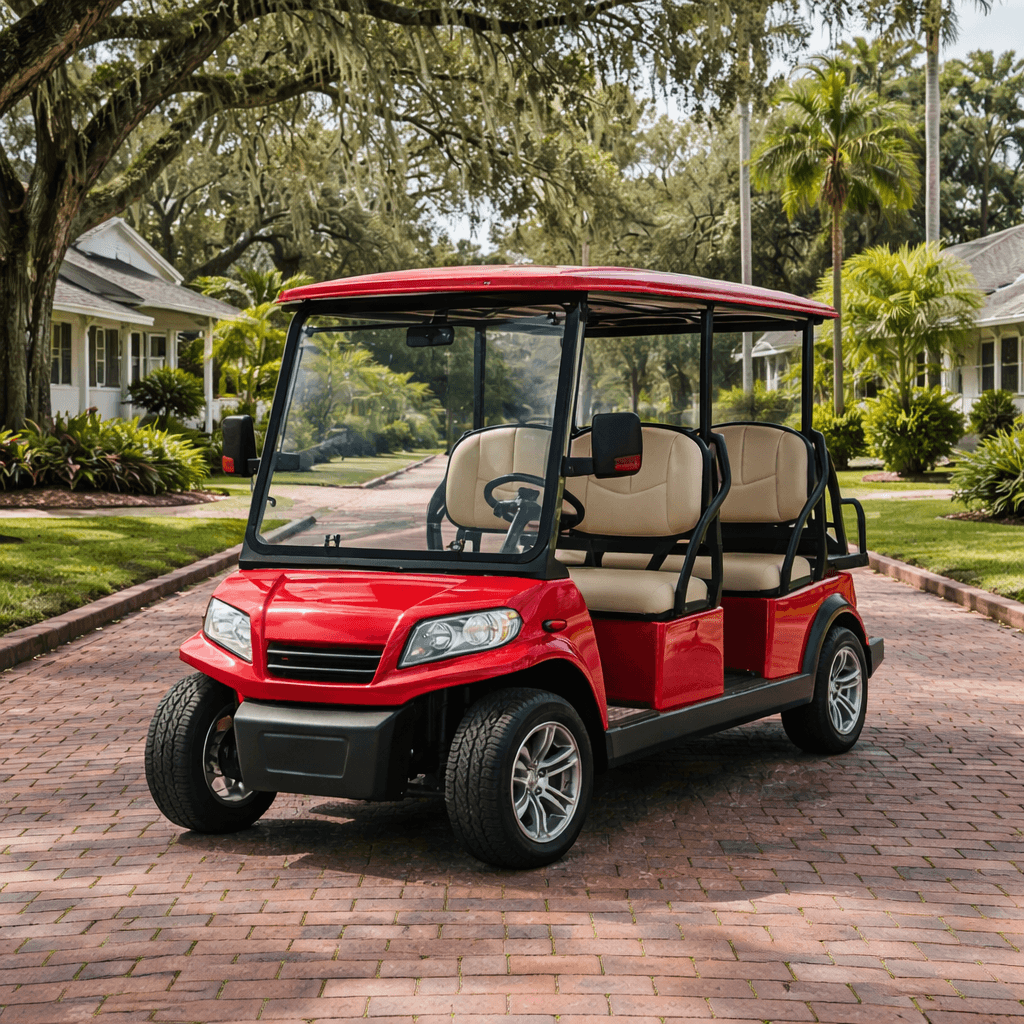
Golf carts and low-speed vehicles (LSVs) aren’t just about transportation—they’re about freedom, leisure, and the Florida lifestyle you love. At Think Safe Insurance, we’re here to protect not only your vehicle but the joy and peace of mind it brings.
Quick Highlights: Florida Golf Cart & LSV Insurance
- Golf Cart vs LSV: Standard golf carts (F.S. §320.01(22)) top out under 20 MPH and don’t require registration or insurance. LSVs (F.S. §320.01(41)) travel 20–25 MPH, must be titled, registered, and carry mandatory PIP and PDL coverage by Florida law.
- Homeowners Won’t Cover It: Standard Florida homeowners policies exclude motorized vehicles once driven off your property, with narrow exceptions generally limited to riding mowers or carts used directly on a golf course. A specialty policy fills that liability gap for neighborhood driving.
- LSV Insurance Is Required: Florida law mandates at least $10,000 PIP and $10,000 PDL for any registered LSV — the same minimums as a car.
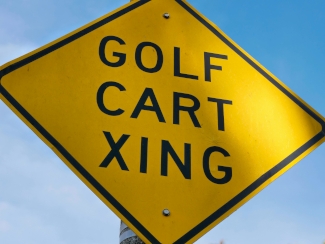
- Road Access Rules: Golf carts may only operate on roads specifically designated by local ordinance with a posted speed limit of 30 MPH or less (F.S. §316.212). LSVs may operate on any road with a speed limit of 35 MPH or less (F.S. §316.2122) — no special designation required.
- Age Law Update: Under Florida HB 949, drivers under 18 must have a learner’s permit or driver’s license to operate a golf cart on public roads.
- The Independent Advantage: Think Safe Insurance knows Florida’s cart lifestyle — from gated communities and golf course neighborhoods to street-legal LSVs on public roads statewide. We know the right programs and carriers for your specific vehicle and registration status, and we’ll make sure your coverage actually works before you need it.
Whether you use your golf cart to cruise your neighborhood, hit the golf course, or travel along Florida’s streets, ensuring your investment is protected is crucial. Similarly, if you own an LSV, protecting your street-legal vehicle is essential for peace of mind and compliance with Florida law.
At Think Safe Insurance, we believe your peace of mind matters, and that’s why we’re here to help you navigate the ins and outs of golf cart insurance in Florida and LSV coverage.
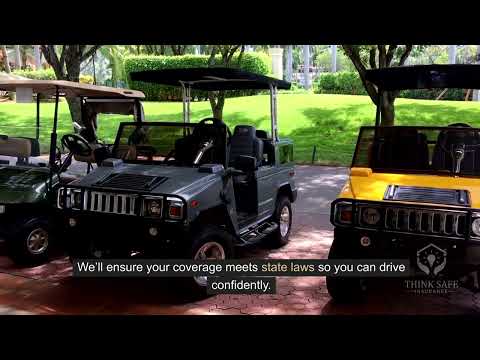
If you’re in the market for golf cart insurance in Florida or LSV insurance, this guide will answer your questions, explain the benefits, and highlight why Think Safe Insurance is your go-to choice for comprehensive and affordable coverage. Call us today at 813-425-1626 or request a quote online.
Florida LSV & Golf Cart Laws: The “Street Legal” Difference
In Florida, the legal distinction between a standard golf cart and a Low-Speed Vehicle (LSV) is critical because it dictates your insurance requirements and where you can legally drive. Golf carts are defined under Florida Statute §320.01(22); LSVs are defined under Florida Statute §320.01(41). Understanding the difference could save you from uninsured liability exposure or a traffic citation.
| Feature | Standard Golf Cart (F.S. §320.01(22)) | Low-Speed Vehicle / LSV (F.S. §320.01(41)) |
|---|---|---|
| Top Speed | Under 20 MPH | 20 – 25 MPH |
| Tag / Title | Not Required | Required (Plate & Title) |
| Insurance | Recommended (Specialty) | Mandatory (PIP & PDL) |
| Required Equipment | Basic (Brakes, Tires) | Headlights, Turn Signals, Mirrors, Windshield, Seatbelts, VIN |
| Road Access | Only roads designated by local ordinance with speed limit ≤ 30 MPH (F.S. §316.212) | Any road with posted speed limit ≤ 35 MPH (F.S. §316.2122) |
| Driver Requirements | 18+ with photo ID; under 18 needs learner’s permit or license (HB 949) | Valid driver’s license required at all times |
Important Safety Update: Under Florida Law (HB 949), drivers under 18 must have a valid learner’s permit or driver’s license to operate a golf cart on public roads. Drivers 18 and older must possess a valid government-issued photo ID. For LSVs, a full driver’s license is always required.
Unregistered vs. Street-Legal Coverage
- Unregistered Golf Carts: Typically used in gated communities, golf courses, or on designated local roads. While registration isn’t required, specialty insurance protects you from theft, liability, and accidents that homeowners insurance often excludes.
- Street-Legal LSVs: Must be registered and insured like a car. Because you share the road with 3,000-lb SUVs, having the right coverage is essential for your financial and physical protection.
What Does Your Policy Cover?
- Liability Coverage: Protects you if you’re at fault for property damage or bodily injury.
- Collision & Comprehensive: Covers repairs from accidents, theft, vandalism, or storms.
- Uninsured Motorist: Critical for LSVs — protects you if you’re hit by someone without insurance.
- Medical Payments & PIP: Covers medical costs for you and your passengers after a crash.
Are You a Golf Cart Dealer?
Looking for a simple insurance resource to offer your customers? We partner with Florida dealerships to ensure your customers get registered right. See our dealer program →
What Factors Affect Your Golf Cart Insurance Premiums?
Because every driver and vehicle is unique, insurance rates in Florida are calculated based on several key factors. Understanding these can help you find the best value for your coverage:
- Drivers: The age of the operators and household members will impact the overall rates.
- Driving History: Your personal driving record (including your auto insurance history) plays a major role in your premium.
- Location: ZIP codes have a big impact, especially on coverages like comprehensive and collision. Rates can vary significantly across Florida.
- Storage: Are you parking it in a garage or out in the open like a driveway or parking lot?
Frequently Asked Questions
Does my homeowners insurance cover my golf cart?
Most Florida homeowners policies exclude liability for motorized vehicles. Built-in exceptions generally only apply to equipment used solely to service the property (like riding lawn mowers), mobility devices assisting the handicapped, or golf carts while being used on a golf course. To protect against liability, collision, or theft while driving around your neighborhood or community streets, a dedicated golf cart policy is required.
What are the Florida age requirements for driving a golf cart in 2026?
Under Florida HB 949, drivers under 18 must have a valid learner’s permit (minimum age 15) or driver’s license to operate a golf cart on public roads. Drivers 18 and older must carry a valid government-issued photo ID.
What is the minimum insurance for an LSV in Florida?
Registered Low-Speed Vehicles (LSVs) must carry at least $10,000 in Personal Injury Protection (PIP) and $10,000 in Property Damage Liability (PDL) to comply with Florida’s financial responsibility laws.
Can I drive my golf cart on the sidewalk?
Generally, no. In Florida, golf carts and LSVs are prohibited from sidewalks unless the specific sidewalk is at least 8 feet wide and has been officially designated by local ordinance as a shared-use path.
Do I need a license plate for my golf cart?
For a standard golf cart (under 20 MPH), no plate is required. However, if your vehicle is an LSV (capable of 20–25 MPH), it must be titled, registered, and display a valid Florida license plate per F.S. §320.01(41).
Is Uninsured Motorist coverage available for LSVs?
Yes, and we highly recommend it. Since LSVs share the road with larger vehicles, UM coverage protects you if you are involved in a collision with a driver who carries no insurance.
Can I insure a modified golf cart in Florida?
Yes. If your golf cart has been upgraded to meet Florida’s street-legal requirements — including headlights, brake lights, turn signals, mirrors, windshield, seatbelts, and a VIN — it can be reclassified and insured as a Low-Speed Vehicle (LSV) under F.S. §320.01(41) with the appropriate PIP and PDL coverage.
What is the difference between a golf cart and an LSV in Florida?
Under Florida Statute §320.01(22), a standard golf cart is designed for golf courses and cannot exceed 20 MPH — no registration or insurance required, though coverage is strongly recommended. Under Florida Statute §320.01(41), an LSV travels between 20–25 MPH, must have required safety equipment, and requires a title, registration, and insurance (PIP + PDL) by law.
Why do you ask if I have a personal umbrella policy?
We ask because your umbrella policy can affect which insurance program we use to quote your golf cart or low-speed vehicle.
Many umbrella insurance policies require certain minimum underlying liability limits. Those requirements can vary by carrier and may depend on whether your golf cart is registered as a street-legal low-speed vehicle (LSV) or used as an unregistered golf cart.
If we don’t know you have an umbrella policy, it’s possible to quote a program that doesn’t meet your umbrella carrier’s underlying liability requirements. That could create problems if you ever need to rely on your umbrella policy after a serious claim.
By asking about your umbrella coverage upfront, we can match you with the right carrier and liability limits from the beginning. In some cases, that also means we’ll need a little more information or quote your golf cart alongside your household auto policies to make sure everything works together properly.
Our goal isn’t to make the process more complicated — it’s to help protect all of your coverage and avoid surprises later.
Why Choose Think Safe Insurance?

We understand the Florida “Cart Lifestyle” because we live here. From Tampa to Brandon, Riverview, Apollo Beach, Sun City Center, and across Florida — we know the right programs and carriers for your specific vehicle and registration status, and we’ll make sure your coverage actually works before you need it.
Click the button below to start your quote or give us a call at 813-425-1626!
When you think insurance… Think Safe!


 | Reviewed by Greg Martin Greg Martin has over 18 years of experience helping Florida families navigate home, auto, flood, and specialty vehicle insurance. He is the owner of Think Safe Insurance. |
Last Reviewed: July 2026