


Flood insurance in Winter Haven, FL is one of the most widely misunderstood aspects of Central Florida property protection. Many homeowners assume flood coverage only matters for lakefront estates or properties sitting squarely inside a high-risk FEMA zone. However, that is simply not how hydrology works across Polk County. Winter Haven is built on an actively managed, interconnected water system — and when canals overflow, retention ponds saturate, or SFWMD water control structures release flow during a tropical event, rising water reaches properties well outside any government map boundary.
Winter Haven Flood Insurance: Quick Takeaways
- The Interconnected Reality: Winter Haven’s North and South Chain of Lakes are linked by canals and lock systems — including the Hartridge-Conine lock — and actively managed by the South Florida Water Management District (SFWMD). Water exposure isn’t just about your property’s elevation; it’s about regional management decisions during storm events.
- The Homeowners Policy Gap: Standard homeowners insurance completely excludes rising surface water. Whether you sit on Lake Howard Drive or inside a Zone X subdivision like Cypresswood or Traditions, canal overflow and stormwater intrusion require a dedicated flood policy.
- NFIP vs. Private Markets: The federal NFIP provides standardized coverage capped at $250,000 for structure and $100,000 for contents. Private flood markets can exceed those limits, shorten the 30-day waiting period, and add endorsements like loss of use and pool equipment protection.
- The Independent Advantage: Think Safe Insurance analyzes your home’s rating factors across multiple private and federal flood markets — not just the easiest option to quote.
At Think Safe Insurance, we help Winter Haven homeowners compare both National Flood Insurance Program (NFIP) policies and private flood insurance options based on the home’s actual location, elevation, nearby lake basin, and drainage exposure. Lakefront homes on Lake Eloise or Lake Howard face different risk profiles than inland communities like Wyndham at Lake Winterset or Garden Grove — and both deserve coverage matched to how water actually moves through their specific block, not just what a ZIP code lookup returns.
Because rising water matters, you deserve more than a generic flood quote. Call 863-356-4600 or request a quote today.
Do You Really Need Flood Insurance in Winter Haven?
The short answer is yes. Many property owners assume that if their mortgage company doesn’t mandate a policy, their home is entirely safe from water damage. In reality, a property’s designated flood zone is a reflection of statistical probability, not a guarantee of immunity.
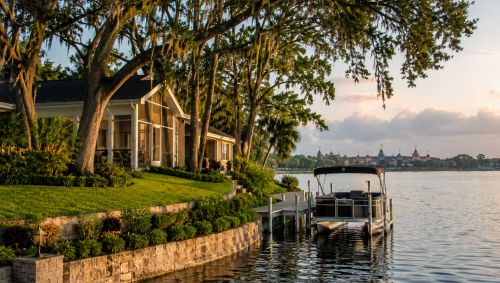
In Winter Haven, a single severe tropical system or a series of heavy summer downpours can quickly alter the local water table. When municipal storm drains, subdivision retention ponds, or canal networks become overwhelmed, water accumulates on the surface and moves toward the lowest point of resistance — regardless of whether a home is labeled high-risk or preferred. Securing a dedicated policy ensures that your structure and personal belongings are protected against the single most common, and most expensive, natural hazard in Florida.
Winter Haven’s Flood Risk Is Different Than Most Florida Cities
Winter Haven is famously known for the Chain of Lakes, but what many homeowners do not realize is how interconnected the city’s hydrology really is. The North Chain and South Chain are connected through canals and lock systems, including the prominent lock connection between Lakes Hartridge and Conine. Water levels throughout the entire system influence drainage patterns far beyond direct waterfront homes.
Crucially, the city’s lake system is actively managed. The South Florida Water Management District (SFWMD) operates regional water control structures to regulate lake levels and flow across the Chain. Property owners can even monitor these fluctuations via the SFWMD’s real-time water level alerts and notification portals. This means a property’s real-world exposure isn’t just a matter of static topography — it can be influenced by active water-management decisions during major weather events as the system drains toward the Peace River watershed. Historical precedent, such as the 2004 hurricane season when Hurricanes Charley, Frances, and Jeanne repeatedly saturated the Polk County water table, proved how quickly interconnected lake basins can expand past their normal boundaries.
Winter Haven Neighborhoods and Specific Flood Zones
Flood exposure varies dramatically depending on your neighborhood’s construction era, engineering, and proximity to water management structures. Real-world risk is split clearly between two major realities across the city:
High-Risk Lakefront Borders (Zone AE): Homes located directly along the shorelines of Lake Howard Drive SW, N. Lake Howard Drive, and older residential pockets surrounding Lake Howard, Lake Elbert, and Lake Eloise Estates frequently sit within designated FEMA Zone AE. This also includes properties flanking the iconic Legoland Florida resort corridor — historically the old Cypress Gardens site on Lake Eloise. In these areas, flood insurance is almost always mandated by lenders because the structures sit immediately adjacent to base flood elevations. Reviewing elevation certificates is vital to determine how high the living space sits relative to the lake’s peak capacity.
Inland Subdivisions & Drainage Corridors (Zone X): Master-planned communities like Cypresswood, Traditions (the active 55+ community), Wyndham at Lake Winterset (off Thompson Nursery Road), Renaissance, Stonewood Crossings, Lake Mariam Woods, and Garden Grove are generally located in preferred Zone X. While lenders rarely require flood coverage here, these neighborhoods rely heavily on engineered grading, street gutters, and neighborhood retention basins. During sudden, intense downpours, localized stormwater backup can still cause surface water to pool deeply in driveways and low points, making private or preferred-rate NFIP coverage a highly practical safety net.
Roads, Topography, and Drainage Corridors
Major traffic corridors like Cypress Gardens Boulevard, U.S. 17, Havendale Boulevard (SR-540), and Central Avenue act as cross-sections for multiple drainage basins throughout Winter Haven. Sloped terrain leading down toward public boat ramps, low-lying intersections, and the popular Chain of Lakes Trail path can channel rushing water rapidly during typical afternoon storms.
Areas near Polk State College’s Winter Haven campus, the historic downtown corridor, and established residential streets around 6th Street SW, 6th Street NW, and 15th Street SW must manage older municipal drainage infrastructure. Unlike newer commercial corridors with massive, modern retention footprints, older districts rely on established, aging gravity-fed drainage paths heading toward the nearest lake basins — making elevation and grading key factors for individual homes.
Why Standard Homeowners Insurance Is Not Enough
Standard homeowners insurance policies explicitly exclude coverage for rising water entering the home from the outside environment. This exclusion is absolute. It applies whether the property is a lakefront estate on Lake Eloise, a golf course home in Cypresswood, or a neat bungalow in the downtown grid.
Many local homeowners are surprised to learn that if an overflowing canal backing up from the Peace River watershed or stormwater collecting from an overloaded street gutter crosses their threshold, a standard property policy will not pay for the damage. A separate, dedicated flood insurance policy is required to trigger structural drying, drywall replacement, and personal property restoration.
NFIP vs. Private Flood Insurance in Winter Haven
The National Flood Insurance Program (NFIP) is the federal option backed by FEMA that writes standard, predictable policies across Polk County. While highly dependable and universally accepted by mortgage lenders, the NFIP strictly caps residential coverage at $250,000 for the building structure and $100,000 for personal belongings.
For many Winter Haven properties — especially custom lakefront homes or modern builds with high replacement costs — private flood insurance markets offer a powerful alternative. Private carriers can provide higher coverage limits, shorter waiting periods (often 10 to 14 days compared to the NFIP’s strict 30-day wait), and unique endorsements like pool equipment protection or loss of use coverage. As an independent agency, Think Safe Insurance compares both platforms to see which market treats your home’s exact elevation and location most favorably.
Step-by-Step: How to Review Flood Insurance for a Winter Haven Home
- Locate the exact FEMA flood zone. Identify if the property touches a high-risk AE zone or sits entirely within a preferred X zone.
- Analyze the property’s structural elevation. Use an elevation certificate to determine how high the foundation sits relative to the closest managed lake basin.
- Trace nearby canal and lock systems. Note proximity to water control structures managed by the SFWMD.
- Map out neighborhood drainage paths. Review how stormwater flows down sloped driveways, nearby boat ramps, or local retention ponds.
- Compare federal NFIP baselines against private flood quotes. Contrast coverage limits, deductibles, waiting periods, and optional endorsements.
- Finalize limits before closing or renewal. Ensure structural dwelling and contents limits match your actual asset protection goals rather than just the mortgage balance.
Verified Winter Haven & Polk County Flood Resources
When researching property-specific data, elevation history, and regional water management plans, use these official local resources:
- FEMA Flood Map Service Center (MSC): The official government portal for looking up current flood insurance rate maps (FIRMs) for your specific address.
- Polk County Floodplain Management Office: Offers personalized assistance regarding local drainage issues and official community flood maps. Contact floodplain management specialists directly at 863-534-6765 or 863-534-6767.
- South Florida Water Management District (SFWMD): Coordinates water control, structure operations, and canal lock schedules for the broader Chain of Lakes system. Visit their portal for active lake-level tracking and watershed data.
- Polk County Property Appraiser (PCPA): Essential for looking up official parcel maps, legal descriptions, subdivision plat books, and construction history for Winter Haven properties.
Frequently Asked Questions About Winter Haven Flood Insurance
Is flood insurance mandatory in Winter Haven if I don’t live directly on a lake?
If your home is financed through a federally backed mortgage and sits within a designated high-risk Special Flood Hazard Area (such as an AE zone near local shorelines), your lender will mandate flood coverage. However, water doesn’t respect map lines. In Winter Haven’s interconnected infrastructure, heavy downpours can cause localized drainage backups, meaning coverage is highly recommended even in preferred X zones.
What is the typical waiting period for a flood policy to take effect?
Standard NFIP policies carry a strict 30-day waiting period from the application date before coverage becomes active, unless the policy is tied to a new mortgage closing. Many private flood insurance carriers offer shorter waiting periods — often ranging from instant coverage to 14 days — highlighting the advantage of comparing all available market options.
Does a standard homeowners insurance policy cover canal overflow?
No. Standard property policies explicitly exclude damage caused by rising surface water. If prolonged rainfall causes local canal connections or municipal storm infrastructure to back up onto your lawn and into your home, you must have a dedicated flood insurance policy in place to cover the loss.
How do private flood insurance options compare to the NFIP in Polk County?
The federal NFIP offers standardized, dependable coverage but caps limits at $250,000 for building structures and $100,000 for personal property. Private flood markets can offer significantly higher coverage caps, competitive underwriting for homes near lake basins like Lake Eloise, and optional endorsements like loss of use or pool equipment protection.
Get a Winter Haven Flood Insurance Quote

You deserve flood insurance guidance from a team that understands Winter Haven’s Chain of Lakes, canal systems, lake-level management, and neighborhood-specific drainage realities. At Think Safe Insurance, we help homeowners throughout Winter Haven, Auburndale, Eagle Lake, Lake Alfred, Lake Hamilton, Wahneta, and surrounding Polk County communities compare flood insurance options with a local-first approach.
We can also help with your Winter Haven homeowners insurance and Winter Haven auto insurance as well!
To cross-shop your property across the entire private and public Florida flood market, contact Think Safe Insurance today at your local Polk line at 863-356-4600 or start your online analysis now:
When you think insurance… Think Safe.


Last Reviewed: May 2026