


Winter Haven homeowners insurance is different from coverage in many other parts of Florida because of the city’s combination of older lakefront neighborhoods, rapidly growing inland developments, hurricane exposure, and water-related risks tied to the Chain of Lakes system. From homes near Lake Howard and Downtown Winter Haven to newer communities like Traditions and Stonewood Crossings, insurance carriers evaluate roof age, storm exposure, flood potential, prior claims, and construction details very differently depending on where the property sits. Because Florida homeowners insurance is among the most expensive in the nation, reviewing coverage carefully matters for protecting both your home and long-term financial stability.
- Local Reality: Winter Haven homes face hurricane exposure, wind-driven rain, flooding concerns around the Chain of Lakes, and rising rebuilding costs throughout Polk County.
- The Coverage Gap: Standard homeowners insurance does not cover flood damage, which creates major exposure for homes near Lake Howard, Lake Eloise, canals, or lower-lying drainage areas.
- Coverage Options: Florida homeowners often need to review replacement cost coverage, hurricane deductibles, flood insurance, wind mitigation credits, and roof eligibility requirements together.
- The Independent Advantage: Independent agencies can compare multiple carriers and underwriting approaches, which is important because some companies view older Winter Haven homes and lakefront properties very differently.
Do You Really Need Homeowners Insurance in Winter Haven?
Most mortgage lenders require homeowners insurance, but the bigger issue in Winter Haven is asset protection. Homes throughout Cypresswood, Renaissance, Garden Grove, Lake Mariam Woods, and Wyndham at Lake Winterset represent major financial investments that can be heavily exposed to Florida weather losses.
Winter Haven sits in Polk County within Florida’s hurricane risk zone, which means carriers closely evaluate roof condition, prior claims, age of the home, and storm-resistant construction features. In Central Florida, underwriters also scrutinize soil stability and sinkhole or catastrophic ground collapse risks — a factor Polk County homeowners frequently encounter when shopping coverage. Even homes farther inland from the coast can experience severe wind damage during tropical systems moving across Central Florida.
The risks also vary significantly depending on location. Older lakefront and near-lake neighborhoods around Lake Howard, the Chain of Lakes historic core, and the downtown grid often face different underwriting scrutiny than newer inland subdivisions like Traditions, Stonewood Crossings, and Lake Eloise Estates that were built with more modern stormwater design standards.
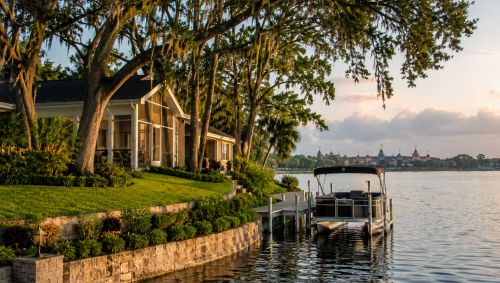
Because rebuilding costs continue to rise across Florida, it is important to understand the difference between replacement cost coverage and actual cash value coverage. Replacement cost helps pay to rebuild with materials at today’s costs, while actual cash value reduces payment based on depreciation. That distinction can become significant after a major storm loss.
Winter Haven’s Storm and Weather Exposure
Winter Haven experiences many of the same weather threats affecting the rest of Central Florida, including hurricanes, severe thunderstorms, hail, tornado activity, and prolonged wind-driven rain events. Areas near Cypress Gardens Boulevard, U.S. 17, SR-544, Thompson Nursery Road, and Havendale Boulevard (SR-540) can all experience storm-related tree damage, roof damage, and water intrusion during stronger weather systems.
Homes near the Lake Howard Drive SW corridor and older parts of Downtown Winter Haven may also face additional concerns tied to mature oak trees, older roofing systems, aging plumbing, and historic construction methods. Carriers frequently review these factors carefully during underwriting inspections.
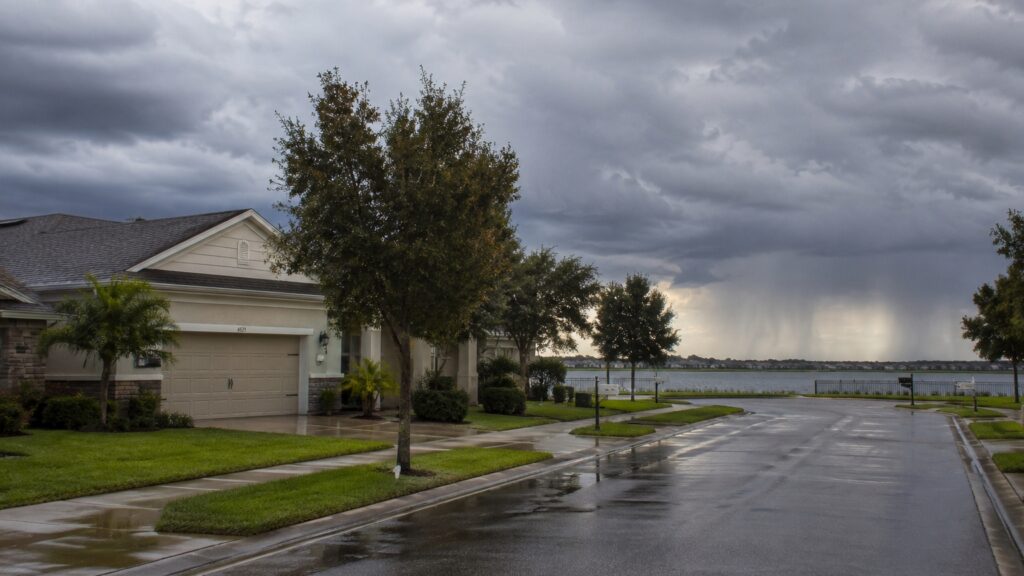
Traffic and growth patterns also matter more than many homeowners realize. Expanding residential areas near Colonial Promenade, Legoland Florida, the Winter Haven Chain O’ Lakes Complex, and major corridors like Central Avenue and 6th Street NW continue to increase property values and rebuilding costs throughout the area. Insurance limits that may have been appropriate several years ago may no longer reflect today’s replacement costs.
Florida hurricane deductibles also surprise many homeowners. Unlike standard deductibles that are often fixed dollar amounts, hurricane deductibles in Florida are typically 2% to 5% of the dwelling limit on the policy. For example, a home insured for $500,000 with a 2% hurricane deductible carries a $10,000 out-of-pocket responsibility after a named storm loss before insurance pays anything.
How Neighborhood and Location Affect Your Rate
Insurance companies evaluate Winter Haven neighborhoods very differently depending on age of construction, proximity to water, roof age, historical claims activity, and drainage patterns.
Communities like Cypresswood, Wyndham at Lake Winterset, Renaissance, and Lake Eloise Estates often feature higher-value homes that may require increased dwelling limits, enhanced liability protection, and stronger roof underwriting standards. Meanwhile, homes in Garden Grove, Lake Mariam Woods, and older sections near Central Avenue or 6th Street NW may face additional review if roofs are older or if prior updates are limited.
Newer developments like Stonewood Crossings and Traditions may benefit from newer building codes, updated roofing standards, and improved drainage infrastructure. However, even newer homes still face high Florida wind exposure and rising replacement costs.
Location also affects flood exposure. Homes near the Chain of Lakes, Lake Howard, Lake Eloise, and areas influenced by the Peace River watershed or Wahneta Farms Drainage Canal may have entirely different flood insurance considerations than inland properties farther from water corridors.
For both older lakefront properties and newer builds in developments like Traditions, securing a certified wind mitigation inspection is one of the most effective ways to lower your homeowners insurance premium. Florida law requires insurance companies to offer credits for wind-resistant features like hurricane clips, roof-to-wall attachments, and impact-resistant opening protections. These credits can produce meaningful savings on Winter Haven homeowners insurance — and the inspection typically pays for itself quickly.
Winter Haven’s position between Auburndale, Lakeland, Eagle Lake, Bartow, Haines City, Lake Alfred, Lake Hamilton, and Wahneta also means continued growth pressure throughout the region. As home values and construction costs increase, insurance limits should be reviewed regularly.
The Chain of Lakes, Canals, and Water Risk
Water exposure is one of the defining insurance issues in Winter Haven. The city’s North and South Chain of Lakes system creates beautiful waterfront living opportunities, but it also creates unique underwriting concerns for many properties.
Homes near Lake Howard, Lake Eloise, connecting canals, and lower-lying sections around the historic lakefront grid can face elevated flood concerns during prolonged rain events and tropical weather systems. Even properties that are not directly on the water can experience drainage-related flooding if nearby retention systems become overwhelmed.
Many homeowners assume their standard homeowners policy covers flood losses simply because the water entered during a storm. It does not. Flood damage requires a separate flood insurance policy through either the National Flood Insurance Program (NFIP) or a private flood insurance carrier.
This issue matters throughout Winter Haven because flood exposure is not limited only to waterfront homes. Properties near SR-544, Havendale Boulevard (SR-540), and areas influenced by older drainage infrastructure may still experience water-related losses during major rain events.
Seasonal homes and vacant homes can also face increased risk because water damage may go unnoticed longer. Homes used part-time near Legoland Florida or investment properties around Downtown Winter Haven may need additional review for vacancy restrictions or secondary home exposure.
Roof Age, Wind Mitigation, and Hurricane Deductibles
Roof condition is the single most scrutinized factor in Florida homeowners insurance underwriting, and Winter Haven is no exception. Many private carriers will not write a new policy on a home with a shingle roof older than 10 to 15 years, or an architectural shingle roof older than 20 years, without a certified inspection confirming remaining useful life.
If your home in Cypresswood, Renaissance, or near the Lake Howard Drive SW corridor has an aging roof, working with an independent agency matters more — because different carriers maintain different underwriting rules, and having access to multiple markets increases your options significantly.
Wind mitigation credits, hurricane deductible structure, and roof eligibility are connected. A certified wind mitigation inspection documents features like roof deck attachment, roof shape, roof covering type, and opening protection. Those credits offset premium costs and may make the difference between an insurable property and one that carriers decline to write.
Why Flood Insurance Is Separate — and Why It Matters Here
No standard homeowners policy covers flood damage. This is one of the most common coverage gaps in Winter Haven, where proximity to the Chain of Lakes, canals, and low-lying drainage corridors creates real flood exposure for a large share of residential properties.
If your home is purchased with a federally backed mortgage and sits within a FEMA Special Flood Hazard Area — such as an A or AE zone near the water — your lender will require a separate flood insurance policy. But even homes outside designated high-risk zones can experience flood losses from heavy rainfall overwhelming local drainage systems.
Flood insurance is available through the National Flood Insurance Program (NFIP) or through private flood insurance carriers, which often provide broader coverage and faster claims handling. Think Safe Insurance can review both options for your specific Winter Haven property and location.
Step-by-Step: How to Review Homeowners Insurance in Winter Haven
- Confirm your current dwelling limit reflects today’s rebuilding costs, not the purchase price or market value of your home.
- Review your roof age and condition — and ask whether your current carrier requires a roof inspection or replacement to renew.
- Check your hurricane deductible percentage and calculate what your out-of-pocket exposure would be after a named storm.
- Schedule a certified wind mitigation inspection if you have not had one recently — credits can reduce your premium meaningfully.
- Determine whether your property has any flood exposure based on proximity to the Chain of Lakes, canals, or lower-lying drainage areas.
- Review flood insurance options separately — NFIP or private flood — especially if you are near Lake Howard, Lake Eloise, or a designated flood zone.
- Ask about sinkhole or catastrophic ground collapse coverage, which is relevant throughout Polk County.
- Compare quotes across multiple carriers through an independent agency to find the best combination of coverage, underwriting flexibility, and price.
Winter Haven Homeowners Insurance — Frequently Asked Questions
Do I need flood insurance if I live near the Chain of Lakes in Winter Haven?
If your home is financed with a federally backed mortgage and sits within a FEMA Special Flood Hazard Area near the water, your lender will require flood insurance. But because drainage backups and heavy rainfall events affect areas well beyond high-risk flood zones in Winter Haven, Think Safe Insurance recommends evaluating flood coverage even if you sit in a preferred or low-risk flood zone. Standard homeowners policies never cover flood damage regardless of cause.
How does roof age affect my homeowners insurance options in Winter Haven?
Significantly. Many Florida carriers will not write new coverage on a shingle roof older than 10 to 15 years without a certified inspection. Architectural shingle roofs often face a 20-year limit. If your home has an aging roof, working with an independent agency that has access to multiple carriers gives you more options than going direct to a single company.
What is a wind mitigation inspection and is it worth it in Winter Haven?
A wind mitigation inspection is a certified assessment of your home’s wind-resistant construction features — roof shape, roof deck attachment, roof covering, and opening protection. Florida law requires carriers to offer premium credits for qualifying features. For many Winter Haven homeowners, the savings from a wind mitigation inspection exceed the cost of the inspection itself within the first policy year.
Does homeowners insurance in Winter Haven cover sinkholes?
Florida law requires carriers to offer catastrophic ground collapse coverage as part of standard homeowners policies. Sinkhole coverage — which is broader — is a separate endorsement that not all carriers offer and not all homeowners purchase. Given Polk County’s geological profile, it is worth asking specifically about sinkhole coverage when reviewing your policy.
Get a Winter Haven Homeowners Insurance Quote

At Think Safe Insurance, we are an independent agency representing multiple highly rated insurance companies — which means we work for you, not for a single carrier. We can help you navigate Florida’s challenging property insurance market, compare roof underwriting rules across carriers, review your wind mitigation credits, and evaluate flood coverage options specific to your Winter Haven neighborhood.
Whether your home is near the Chain of Lakes, in a newer inland community, or in one of Winter Haven’s established historic neighborhoods, we can help you find coverage that fits both your property and your budget.
Call 863-356-4600 or request a quote online today.
Also serving homeowners in Auburndale, Bartow, Eagle Lake, Haines City, Lake Alfred, Lake Hamilton, Lakeland, and Wahneta.
Related coverage: Winter Haven Flood Insurance | Winter Haven Auto Insurance
When you think insurance… Think Safe.


Last Reviewed: June 2026