


Lakeland auto insurance is different than auto insurance in many other parts of Florida because Lakeland sits directly along one of the busiest commuter and trucking corridors in the state. Daily traffic flowing between Tampa and Orlando along I-4, combined with heavy local congestion around U.S. 98, Memorial Boulevard, and South Florida Avenue, creates accident exposure that many drivers underestimate until they experience it firsthand.
- Local Reality: Lakeland recorded 4,931 traffic accidents in 2024, including 84 serious injuries and 21 fatalities. Heavy commuter and truck traffic along I-4 and U.S. 98 increases accident severity throughout Polk County.
- The Coverage Gap: Florida only requires $10,000 PIP and $10,000 Property Damage Liability coverage, which is often nowhere near enough for modern medical bills or vehicle repairs.
- Coverage Options: Higher liability limits, uninsured motorist coverage, comprehensive, and collision coverage all play a major role for Lakeland drivers facing truck traffic, storm damage, and uninsured motorists.
- The Independent Advantage: Think Safe Insurance compares multiple carriers side-by-side to help Lakeland drivers evaluate pricing, coverage, and policy options based on how and where they actually drive.
From historic neighborhoods like Dixieland and South Lake Morton to growing areas around Lakeland Highlands, driving conditions and insurance risks vary dramatically depending on commute patterns, garaging location, traffic density, and proximity to Lakeland’s busiest commercial corridors. Because protecting your vehicle and financial stability matters, understanding Lakeland’s unique driving environment is critical when reviewing your insurance options.
Do You Really Need Auto Insurance in Lakeland?
Absolutely. Florida law requires drivers to carry at least $10,000 in Personal Injury Protection (PIP) and $10,000 in Property Damage Liability (PDL), but those minimum limits often fall dangerously short in a city with Lakeland’s traffic volume and accident frequency.
Polk County recorded 13,225 crashes in 2022, while Lakeland alone saw 4,931 traffic accidents in 2024, including 84 serious injuries and 21 fatalities. Careless driving contributed to roughly 28% of serious injury crashes, while right-of-way violations accounted for another 16%. Impaired driving played a role in more than 40% of fatal crashes, despite representing only a small percentage of total collisions.
Those numbers matter because many Lakeland drivers still carry only Florida’s minimum required limits. A moderate accident involving multiple vehicles near Lake Mirror, Lakeland Regional Health, or the Publix Super Markets headquarters can exceed minimum coverage limits very quickly.
Insurance should protect your actual financial exposure, not simply help you satisfy a legal requirement. Coverage designed for real-world Lakeland traffic conditions looks very different from a minimum-limits policy.
Lakeland’s Driving Environment Is Different Than Most Florida Cities
Lakeland sits directly between Tampa and Orlando along I-4, making it one of Central Florida’s most important commuter corridors. Every day, thousands of drivers travel west toward Tampa, east toward Orlando, south toward Bartow, or north toward surrounding Polk County communities.
Commuters heading toward Brandon often use I-4 west combined with SR-60 corridors. Drivers traveling toward Plant City rely heavily on I-4 west, while residents commuting toward Winter Haven frequently use U.S. 92 or SR-540. Meanwhile, local traffic between Lakeland and Auburndale, Haines City, and Polk City continues increasing as Polk County grows.
I-4 itself remains one of the most dangerous highways in Florida for rear-end collisions, multi-vehicle accidents, and serious truck crashes. Lakeland recorded approximately 327 truck accidents in 2024, largely tied to commercial traffic moving through the I-4 logistics corridor.
Heavy truck traffic matters because accident severity often increases dramatically when commercial vehicles are involved. A crash involving a semi-truck near George Jenkins Boulevard, Kathleen Road, or I-4 can quickly create six-figure injury exposures.
Lakeland also experiences a high number of vulnerable roadway users. In 2024, the city recorded approximately 167 pedestrian and bicycle collisions. Areas near Florida Southern College, Polk State College Lakeland campus, and downtown Lakeland see increased pedestrian traffic throughout the day, especially around crosswalk-heavy corridors.
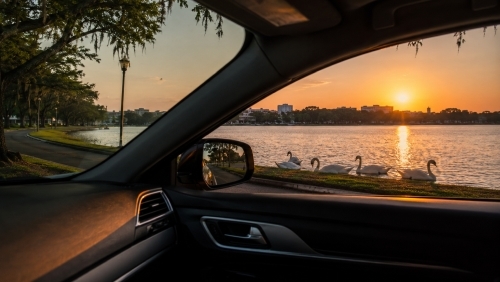
Lakeland Neighborhoods and Garaging Location
Insurance pricing in Lakeland can vary significantly based on where your vehicle is primarily garaged. Neighborhood density, theft frequency, traffic flow, roadway access, storm exposure, and commute patterns all influence rates.
Drivers in Dixieland and South Lake Morton often deal with older street layouts, tighter parking conditions, mature oak canopies, and heavier pedestrian activity near downtown Lakeland. Meanwhile, homes near the Lake Hollingsworth area and Cleveland Heights may see more recreational bicycle traffic and busy school-related congestion.
Areas like Beacon Hill and Lakeland Highlands typically involve different commute patterns, with many residents traveling daily toward Tampa, Orlando, or distribution hubs surrounding Lakeland’s industrial corridors.
Garaging location also affects comprehensive coverage exposure. Homes beneath mature tree canopies may face increased storm debris risks during summer thunderstorms, while lower-lying streets near lakes or retention systems can experience standing water after prolonged rainfall.
Because Lakeland contains a mix of historic neighborhoods, modern suburban development, and high-volume commercial corridors, two drivers only a few miles apart can face very different insurance pricing structures.
Major Roads, Corridors, and High-Risk Intersections
Several Lakeland roads consistently experience elevated congestion and accident activity throughout the day.
- U.S. 98 at Memorial Boulevard remains one of Lakeland’s busiest intersections, especially during rush hour and retail traffic periods.
- South Florida Avenue at Edgewood Drive frequently experiences stop-and-go congestion, turning conflicts, and rear-end collisions.
- Lakeland Highlands Road continues seeing heavy residential growth and increasing commuter volume.
- Florida Avenue and South Florida Avenue both handle major north-south traffic movement through Lakeland.
- Kathleen Road and George Jenkins Boulevard carry significant commercial and commuter traffic tied to warehouse and logistics operations.
- Memorial Boulevard remains one of the city’s busiest retail and connector corridors.
These traffic patterns directly influence accident frequency, claim severity, and overall insurance exposure throughout Lakeland.
Accident concerns tied to aggressive lane changes, distracted driving, and right-of-way violations are also common near shopping corridors surrounding Lake Mirror, downtown Lakeland, and major retail centers along U.S. 98.
Why Liability Limits and UM Coverage Matter in Polk County
Florida’s minimum liability requirements are extremely low compared to today’s repair costs and medical expenses.
A newer SUV, electric vehicle, or luxury pickup damaged in a Lakeland accident can easily exceed Florida’s $10,000 Property Damage Liability minimum. Once those limits are exhausted, drivers may become personally responsible for additional damages.
Uninsured Motorist (UM) coverage becomes especially important throughout Polk County because Florida’s uninsured driver rate remains around 20% statewide, and Polk County often runs even higher.
UM coverage helps protect you if another driver causes an accident but either has no insurance or insufficient coverage to fully pay for injuries. This matters even more in high-traffic areas involving commercial truck exposure along I-4.
Many Lakeland drivers choose higher liability limits combined with uninsured motorist coverage to help protect savings, income, and long-term assets after a serious accident.
Comprehensive and Collision Coverage for Lakeland Drivers
Comprehensive and collision coverage protect your own vehicle, not just damage you cause to others.
Collision coverage helps pay for repairs after an accident involving another vehicle or object, regardless of fault.
Comprehensive coverage protects against non-collision damage such as:
- Storm debris
- Falling tree limbs
- Vehicle flooding
- Hail damage
- Theft
- Vandalism
- Cracked windshields from road debris
This is particularly important in Lakeland because severe summer thunderstorms can develop rapidly across Polk County. Sudden rainfall accumulation around Memorial Boulevard, U.S. 98, and lower-lying roads near lake systems can create dangerous standing water very quickly.
Comprehensive coverage also becomes valuable because of Lakeland’s heavy truck traffic. Road debris from commercial vehicles traveling through I-4 and surrounding industrial corridors contributes to windshield and body damage claims throughout the area.
Actual pricing varies significantly based on driving history, vehicle type, coverage structure, commute patterns, and garaging location. Two drivers in the same Lakeland zip code can receive very different quotes depending on their individual profile — which is why comparing multiple carriers matters.
Step-by-Step: How to Review Auto Insurance in Lakeland
- Review your current liability limits and compare them against modern vehicle and medical costs.
- Verify whether you carry uninsured motorist coverage and review the limits carefully.
- Check whether comprehensive and collision coverage still make sense for your vehicle value and daily commute exposure.
- Evaluate your deductible structure and confirm it fits your emergency savings comfort level.
- Review your garaging location, commute mileage, and household drivers for possible rating adjustments.
- Ask about available discounts for safe driving, multi-vehicle households, telematics, or bundled policies.
- Work with an independent insurance agency that can compare multiple carriers side-by-side instead of relying on one company’s pricing.
Frequently Asked Questions
Is Florida’s minimum auto insurance enough for Lakeland drivers?
In many cases, no. Florida’s minimum required limits are often far too low for today’s medical costs and vehicle repair expenses, especially with Lakeland’s traffic volume and truck exposure.
Why is uninsured motorist coverage important in Polk County?
Florida has one of the highest uninsured driver rates in the country. Uninsured motorist coverage helps protect you if another driver causes an accident but lacks enough insurance to pay for your injuries.
Does comprehensive coverage help with flood damage to my vehicle?
In many cases, yes. Comprehensive coverage typically helps cover flood-related vehicle damage caused by heavy rain, standing water, or storm-related flooding.
Why do Lakeland insurance rates vary by neighborhood?
Insurance companies evaluate factors like accident frequency, storm exposure, theft patterns, commute traffic, and garaging location. Neighborhoods throughout Lakeland can have very different risk profiles.
Get a Lakeland Auto Insurance Quote

Protecting yourself on Lakeland roads means understanding how commuter traffic, uninsured drivers, commercial truck exposure, storm conditions, and local accident trends all interact across Polk County. Think Safe Insurance helps Lakeland drivers compare multiple coverage options based on how they actually drive and where they live.
Call 863-356-4600 today or request your quote online to review your Lakeland auto insurance options.
Also serving Lakeland residents: Lakeland Homeowners Insurance | Lakeland Flood Insurance
When you think insurance… Think Safe.


Last Reviewed: May 2026