


Lakeland homeowners insurance requires a very different strategy than homeowners insurance in many other parts of Florida. Between Polk County’s hurricane exposure, Lakeland’s 38 named lakes, aging historic neighborhoods, and rapid suburban development around Lakeland Highlands, protecting a home here involves far more than simply carrying a standard policy.
Coverage needs vary dramatically depending on roof age, drainage exposure, wind mitigation features, rebuilding costs, and proximity to Lakeland’s busiest corridors like U.S. 98, Memorial Boulevard, South Florida Avenue, and George Jenkins Boulevard.
- Local Reality: Lakeland sits within Florida’s hurricane risk zone and experienced 78 mph wind gusts during Hurricane Ian in 2022. Inland homes are not immune to major storm damage, especially near lake systems and older tree-lined neighborhoods.
- The Coverage Gap: Standard homeowners insurance policies do not cover flood damage from rising water. Many Lakeland homeowners are surprised to learn separate flood insurance is required.
- Coverage Options: Replacement cost dwelling coverage, wind mitigation credits, hurricane deductible structures, flood insurance, and roof underwriting requirements all play major roles in Lakeland homeowners insurance.
- The Independent Advantage: Think Safe Insurance compares multiple Florida carriers side-by-side to help Lakeland homeowners navigate private market options, roof restrictions, and changing underwriting rules.
Communities like Hallam Preserve and Christina represent Lakeland’s newer suburban growth, while established areas like Dixieland, South Lake Morton, and Lakeland Highlands each bring very different construction profiles, drainage patterns, and underwriting considerations. Understanding those differences is critical when reviewing your coverage options.
Do You Really Need Homeowners Insurance in Lakeland?
Absolutely. Florida homeowners insurance remains among the most expensive and complex insurance markets in the country, and Lakeland homeowners face a unique combination of storm exposure, rebuilding cost inflation, roof underwriting restrictions, and inland flooding concerns.
Many homeowners assume inland Polk County properties are insulated from major weather losses compared to coastal Florida, but Hurricane Ian proved otherwise. Lakeland experienced wind gusts reaching approximately 78 mph during the storm, causing roof damage, fallen trees, power outages, and water intrusion throughout the area.
At the same time, rebuilding costs across Florida continue rising due to labor shortages, material pricing, and demand spikes after major storms. Dwelling limits that were adequate several years ago may now fall short of actual reconstruction costs if a major loss occurs.
Insurance should protect the true cost to rebuild your home — not simply satisfy a mortgage requirement.
Lakeland’s Storm and Weather Exposure
Lakeland’s location deep inside Central Florida creates a false sense of security for some homeowners. While the city avoids direct coastal storm surge, Polk County still sits within Florida’s hurricane risk zone and experiences severe wind, rain, lightning, and tropical weather exposure every year.
Large mature oak canopies throughout neighborhoods like South Lake Morton, Cleveland Heights, Beacon Hill, and the Lake Hollingsworth area create beautiful streetscapes, but they also increase storm debris and falling limb exposure during severe weather events.
Summer thunderstorms also develop rapidly across Lakeland. Heavy rainfall frequently impacts major corridors including Florida Avenue, Memorial Boulevard, Lakeland Highlands Road, U.S. 98, and South Florida Avenue. Water accumulation can occur quickly during prolonged downpours, especially near older drainage systems and low-lying roads surrounding Lakeland’s lake network.
Wind-driven rain becomes especially problematic for older homes where aging roof systems, flashing failures, or outdated construction methods allow water intrusion during severe storms.
How Neighborhood and Location Affect Your Rate
Where your home is located inside Lakeland significantly affects insurance pricing and underwriting eligibility.
Historic neighborhoods like Dixieland and South Lake Morton often contain older homes with unique architectural character, plaster walls, detached garages, mature trees, and aging electrical or plumbing systems. While these neighborhoods remain highly desirable because of their proximity to Lake Mirror, Florida Southern College, and downtown Lakeland, older construction features can create additional underwriting scrutiny.
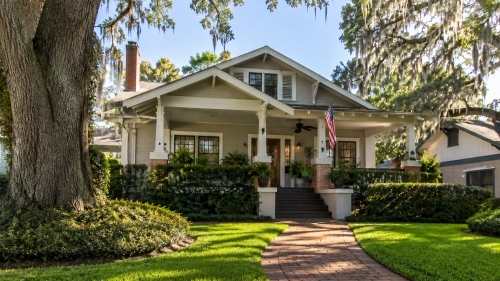
Homes near Lakeland Regional Health, Polk State College Lakeland campus, and the Publix Super Markets headquarters may experience higher property values and rebuilding costs because of strong employment demand throughout the area.
Meanwhile, growing suburban areas throughout Lakeland Highlands typically feature newer homes built under more modern Florida building codes. These properties often benefit from improved wind mitigation features, updated roofing systems, and modern drainage planning.
Even within Lakeland itself, homes only a few miles apart can receive dramatically different insurance quotes depending on roof age, construction type, prior claims history, flood exposure, and proximity to lakes or retention systems.
The Lakes, Drainage, and Flood Exposure
Lakeland’s geography plays a major role in local insurance risk. The city contains 38 named lakes formed largely through Central Florida’s karst geology. These lake systems influence drainage patterns throughout the city and can contribute to highly localized flooding behavior during severe rain events.
Areas surrounding Lake Hollingsworth, Lake Morton, and Lake Mirror may experience very different runoff behavior than homes farther inland. Properties near older drainage infrastructure or retention systems can face standing water issues after prolonged tropical rainfall.
Busy commercial corridors like Memorial Boulevard and U.S. 98 generate enormous paved-surface runoff during storms, placing additional pressure on nearby drainage systems.
Flood exposure also differs dramatically between older neighborhoods and modern developments. While newer subdivisions often include engineered retention systems, even those systems can become overwhelmed during consecutive days of heavy rainfall.
Roof Age, Wind Mitigation, and Hurricane Deductibles
Roof age remains one of the most important factors affecting homeowners insurance availability in Florida.
Many private insurance carriers have tightened underwriting requirements significantly in recent years. Shingle roofs older than 10–15 years may face limited carrier options, higher premiums, or inspection requirements depending on condition and documentation.
Wind mitigation inspections have become increasingly valuable for Lakeland homeowners because they identify construction features that help reduce storm damage risk. Features like hip roofs, hurricane clips, secondary water resistance barriers, and modern roof-to-wall attachments can generate meaningful premium discounts.
Florida homeowners should also understand how hurricane deductibles work. Unlike standard deductibles, hurricane deductibles are typically calculated as a percentage of the dwelling limit — commonly 2%, 5%, or higher. For example, a home insured for $500,000 with a 2% hurricane deductible would carry a $10,000 out-of-pocket responsibility before hurricane coverage begins.
Standard Florida homeowners policies also include catastrophic ground collapse coverage as required by state law. This is a narrowly defined coverage and separate from broader sinkhole protection.
Why Flood Insurance Is Separate — and Why It Matters Here
One of the biggest misconceptions among Lakeland homeowners is assuming flood damage is covered by a standard homeowners policy. It is not.
Flood insurance is a completely separate policy, whether purchased through the National Flood Insurance Program (NFIP) or through a private flood carrier.
This matters in Lakeland because inland freshwater flooding often develops from heavy rainfall, overwhelmed drainage systems, and rising water around lake systems — not just coastal storm surge.
Homes in areas near Lake Hollingsworth, Lake Morton, Beacon Hill, Cleveland Heights, and portions of Lakeland Highlands can still experience meaningful flood exposure even outside mandatory FEMA flood zones.
Many homeowners moving from Brandon, Winter Haven, Auburndale, Bartow, Haines City, Polk City, or Plant City are surprised to learn how rapidly standing water can develop around Lakeland’s interconnected drainage and lake systems during tropical rainfall events.
Private flood insurance has expanded significantly throughout Florida and may provide broader coverage options, higher limits, and shorter waiting periods compared to traditional NFIP policies.
Navigating Florida’s Homeowners Insurance Market
Florida’s homeowners insurance market has changed dramatically in recent years. Many carriers have reduced exposure in certain areas, tightened underwriting guidelines, or implemented stricter roof age requirements. Understanding how to navigate the private market is one of the most important things a Lakeland homeowner can do.
Some Lakeland homeowners qualify for competitive private market pricing depending on roof age, updates, claims history, and wind mitigation features. Others may face more limited options requiring a broader search across available carriers.
Replacement cost versus actual cash value coverage is another major distinction homeowners should understand. Replacement cost coverage helps pay to rebuild using current material and labor pricing, while actual cash value coverage factors in depreciation. That difference can become financially significant after a major loss involving roofing materials, flooring, cabinetry, or interior finishes.
Vacant or seasonal homes may also require specialized underwriting considerations because occupancy patterns can affect both eligibility and pricing.
Step-by-Step: How to Review Homeowners Insurance in Lakeland
- Review your dwelling limit and confirm it reflects current rebuilding costs rather than market value alone.
- Verify whether your roof age and condition meet current Florida underwriting requirements.
- Schedule or update your wind mitigation inspection to identify available discounts.
- Review your hurricane deductible carefully and confirm you understand your out-of-pocket exposure.
- Determine whether you need separate flood insurance through NFIP or a private carrier.
- Check whether your policy uses replacement cost or actual cash value for roofing and personal property.
- Review any vacant home or seasonal occupancy concerns that could affect coverage eligibility.
- Work with an independent insurance agency that can compare multiple Florida carriers side-by-side.
Frequently Asked Questions
Does homeowners insurance cover flooding in Lakeland?
No. Standard homeowners insurance policies do not cover flood damage caused by rising water entering from outside the structure. Separate flood insurance is required whether you are in a high-risk flood zone or not.
Why does roof age matter so much for Florida homeowners insurance?
Roof age strongly affects underwriting eligibility because older roofs are more vulnerable to wind and water damage. Many Florida carriers now restrict coverage for shingle roofs older than 10–15 years depending on condition and documentation.
Do homes near Lakeland’s lakes face higher insurance risk?
They can. Homes near Lake Hollingsworth, Lake Morton, Lake Mirror, or nearby drainage systems may experience different flood exposure, runoff behavior, and stormwater accumulation depending on elevation and local infrastructure.
What is the difference between a hurricane deductible and a standard deductible?
A standard deductible is typically a flat dollar amount that applies to everyday claims. A hurricane deductible only triggers during named storms and is calculated as a percentage of your dwelling limit — commonly 2% to 5%. On a $400,000 home, a 2% hurricane deductible means $8,000 out of pocket before coverage begins.
Why do homeowners insurance rates vary so much throughout Lakeland?
Insurance companies evaluate factors like roof age, home updates, claims history, flood exposure, construction type, storm risk, and neighborhood-specific underwriting trends. Two homes only a few miles apart can receive very different pricing.
Get a Lakeland Homeowners Insurance Quote

Protecting a home in Lakeland means understanding how hurricanes, lake geography, drainage infrastructure, roof underwriting, and Florida’s evolving insurance market all interact. Think Safe Insurance helps Lakeland homeowners compare multiple carriers and coverage structures based on the specific characteristics of their home and neighborhood.
Call 863-356-4600 today or request your quote online to review your Lakeland homeowners insurance options.
Also serving Lakeland residents: Lakeland Flood Insurance | Lakeland Auto Insurance
When you think insurance… Think Safe.


Last Reviewed: June 2026