


Lakeland, Florida is the largest city in Polk County and one of the fastest-growing metro areas in the United States. Located roughly 45 minutes east of Tampa and about an hour southwest of Orlando, Lakeland continues attracting new residents because of its central location, expanding job market, historic neighborhoods, and balance between city amenities and residential communities. With approximately 124,000 residents as of 2025 and rapid growth continuing throughout the I-4 corridor, Lakeland presents unique insurance considerations tied to weather exposure, lake geography, commuting patterns, and Florida’s evolving property insurance market.
- Population: Approximately 124,000 residents and growing rapidly throughout the Lakeland metro area.
- County: Lakeland is the largest city in Polk County, Florida — county seat is Bartow.
- Known For: 38 named lakes, Publix Super Markets headquarters, Downtown Lakeland, Florida Southern College, and central I-4 location between Tampa and Orlando.
- Insurance Relevance: Inland storm exposure, lake-related flood concerns, older historic housing stock, and heavy commuter traffic all influence insurance risks throughout Lakeland.
- Climate Note: Subtropical heat and humidity, frequent afternoon thunderstorms, and hurricane season running June through November.
Where Is Lakeland, Florida?
Lakeland sits directly along the I-4 corridor in Central Florida between Tampa and Orlando. The city serves as a major transportation, healthcare, logistics, education, and business hub for Polk County and the surrounding region. Residents can reach Tampa in roughly 45 minutes under normal traffic conditions, while Orlando is typically about an hour away depending on congestion along I-4.
Because of this location, Lakeland has experienced significant population and commercial growth over the last several years. Between 2020 and 2023, the metro area grew approximately 12%, making it one of the fastest-growing regions in the country. New residential developments continue expanding around Lakeland Highlands, Kathleen Road, and the south Lakeland area, while Downtown Lakeland remains an important center for business, dining, education, and local government activity.
Major transportation routes including I-4, U.S. 98, Memorial Boulevard, Florida Avenue, South Florida Avenue, Lakeland Highlands Road, Kathleen Road, and George Jenkins Boulevard all play a major role in how residents move throughout the city and commute toward Tampa, Orlando, Winter Haven, and surrounding Polk County communities.
Lakeland Neighborhoods and Communities
Lakeland contains a wide mix of historic districts, established residential neighborhoods, and rapidly growing suburban communities. Each area brings different housing styles, commute patterns, flood exposure considerations, and insurance challenges.
Historic areas like Dixieland and South Lake Morton remain highly desirable because of their proximity to Downtown Lakeland, Lake Mirror, and Florida Southern College. These neighborhoods feature mature oak trees, older architecture, brick streets, and homes that may require additional underwriting review because of roof age, plumbing updates, or older electrical systems.
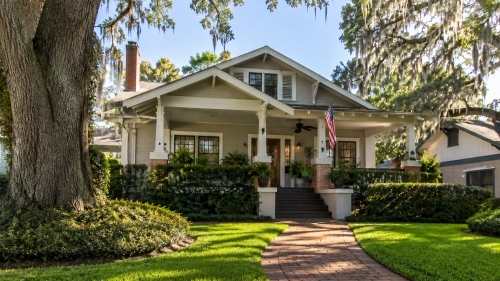
Neighborhoods surrounding the Lake Hollingsworth area, Cleveland Heights, and Beacon Hill are known for established homes, walkability, and recreational activity near the lakes. Traffic congestion and pedestrian activity can increase around these areas during school events, weekends, and peak commuting hours.
Meanwhile, communities like Lakeland Highlands, Hallam Preserve, and Christina represent Lakeland’s expanding suburban growth. Many of these homes were built under newer Florida building codes and may include modern wind mitigation features that can help homeowners qualify for insurance discounts.
Because Lakeland includes both historic housing stock and modern development, insurance needs can vary dramatically from one neighborhood to another. A home near Lake Morton may face very different underwriting considerations than a newer property farther south near Lakeland Highlands Road.
Weather, Storm Risk, and What It Means for Residents
Lakeland experiences a humid subtropical climate with long summers, high humidity, and frequent afternoon thunderstorms throughout much of the year. Hurricane season officially runs from June through November, and inland locations like Lakeland are not immune from major storm impacts.
Hurricane Ian in 2022 demonstrated this clearly when Lakeland experienced wind gusts reaching approximately 78 mph. Fallen trees, roof damage, water intrusion, and widespread power outages impacted homes and businesses throughout the city. Mature tree canopies around neighborhoods like South Lake Morton, Cleveland Heights, and the Lake Hollingsworth area create beautiful streetscapes, but they can also increase storm debris risks during severe weather.
Frequent summer thunderstorms also create localized flooding and drainage issues around major corridors like Memorial Boulevard, South Florida Avenue, and U.S. 98. Heavy rainfall can accumulate rapidly during tropical systems, especially near older drainage infrastructure and low-lying roads.
For homeowners, this means roof age, wind mitigation features, and flood exposure all play major roles in insurance eligibility and pricing. Older homes in historic districts often face different underwriting scrutiny than newer construction in areas like Hallam Preserve or Christina.
Lakes, Karst Geology, and Flood Exposure
Lakeland’s identity is heavily tied to water. The city contains 38 named lakes, including Lake Hollingsworth, Lake Morton, Lake Mirror, and Lake Gibson. Many of these lakes formed through ancient sinkhole activity associated with Central Florida’s karst geology.
That geological history influences how water drains throughout the city today. During prolonged rainfall events or tropical systems, water behavior can vary significantly from one street to another depending on elevation, drainage infrastructure, retention systems, and proximity to lakes or canals.
Flood exposure in Lakeland is not limited to FEMA high-risk flood zones. Many homes in Zone X areas still experience standing water or street flooding after severe rainfall. This surprises many residents because standard homeowners insurance policies do not cover rising water entering from outside the structure.
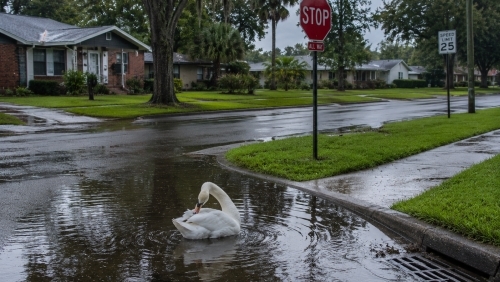
Both NFIP flood insurance and private flood insurance options are available throughout Lakeland. Private flood policies sometimes offer higher coverage limits, additional living expense coverage, and shorter waiting periods compared to traditional NFIP policies.
Getting Around Lakeland
Lakeland’s transportation network is heavily influenced by its central location between Tampa and Orlando. Thousands of residents commute daily using I-4, while local traffic concentrates around major north-south corridors like Florida Avenue, S Florida Avenue, Kathleen Road, and U.S. 98.
Traffic congestion has increased significantly as the city grows, particularly near Memorial Boulevard, George Jenkins Boulevard, Lakeland Highlands Road, and retail corridors surrounding Downtown Lakeland and Lake Mirror. Truck traffic moving through the I-4 logistics corridor also contributes to accident exposure throughout the area.

For drivers, these conditions make auto insurance especially important. Florida’s no-fault insurance system requires Personal Injury Protection (PIP), but many Lakeland drivers choose higher liability limits and uninsured motorist coverage because Florida continues having one of the highest uninsured driver rates in the country.
Commuters traveling daily toward Tampa, Orlando, Brandon, Winter Haven, or Bartow often spend substantial time on busy highways where accident severity can increase quickly. Heavy truck traffic near I-4 and George Jenkins Boulevard also contributes to larger repair costs after collisions.
Local Employers, Economy, and Why People Live Here
Lakeland’s economy continues expanding because of its central location, healthcare sector, education presence, and logistics infrastructure. Publix Super Markets headquarters remains one of the city’s most recognizable employers, with roughly 8,000 employees tied to corporate operations in Lakeland.
Lakeland Regional Health also plays a major role in the local economy with approximately 6,000 employees. Educational institutions including Florida Southern College and the Polk State College Lakeland campus contribute additional employment and student activity throughout the area.
Retail and logistics growth along the I-4 corridor continues attracting businesses and distribution centers because of Lakeland’s location between Tampa and Orlando. Many residents choose Lakeland because they can access larger metro job markets while still living in a community with established neighborhoods, lakes, parks, and a strong local identity.
Downtown Lakeland has also continued evolving with restaurants, local businesses, office development, and community events centered around Lake Mirror and surrounding districts. Combined with ongoing residential development in south Lakeland and Lakeland Highlands, the city continues attracting both long-time Polk County residents and newcomers relocating from other parts of Florida.
Insurance Considerations for Lakeland Residents
Insurance in Lakeland requires understanding how weather, growth, traffic, lakes, and Florida’s changing insurance environment all intersect.
For homeowners, roof age, wind mitigation features, flood exposure, and proximity to lakes all influence insurance availability and pricing. Historic homes in Dixieland or South Lake Morton may require different underwriting review than newer homes in Hallam Preserve or Christina.
For drivers, heavy commuter traffic along I-4, U.S. 98, Memorial Boulevard, and South Florida Avenue increases accident exposure throughout the region. Florida’s high uninsured driver rate makes uninsured motorist coverage especially important for many Polk County households.
Flood insurance is another major topic throughout Lakeland because inland flooding from heavy rainfall can develop quickly around lake systems, retention ponds, and low-lying roads. Many residents are surprised to learn flood damage is excluded under standard homeowners insurance policies.
Florida’s property insurance market has also become increasingly complex in recent years, with changing underwriting requirements, roof restrictions, and fewer carrier options for some homes. Working with an independent agency helps Lakeland residents compare multiple carriers side-by-side rather than being limited to one company’s guidelines.
Nearby Cities We Also Serve
Think Safe Insurance proudly serves residents throughout Lakeland and surrounding Central Florida communities including Auburndale, Bartow, Brandon, Haines City, Plant City, Polk City, and Winter Haven.
Whether you are relocating to Polk County, reviewing your current coverage, or comparing options for a home near Lakeland’s lake systems, our team can help you evaluate policies built around your actual local risks.
Homeowners Insurance
Roof age restrictions, wind mitigation credits, flood exposure, and underwriting requirements for historic and modern Lakeland neighborhoods.
Auto Insurance
I-4 commuter corridor risk, high accident frequency, uninsured motorist exposure, and truck traffic throughout Polk County.
Flood Insurance
Why standard homeowners policies exclude rising water, and how to evaluate NFIP and private flood options near Lakeland’s 38 lakes.
Call our local independent agency today at 863-356-4600 or connect with us online to compare policies across multiple top-rated Florida carriers.
When you think insurance… Think Safe.


Last Reviewed: June 2026